
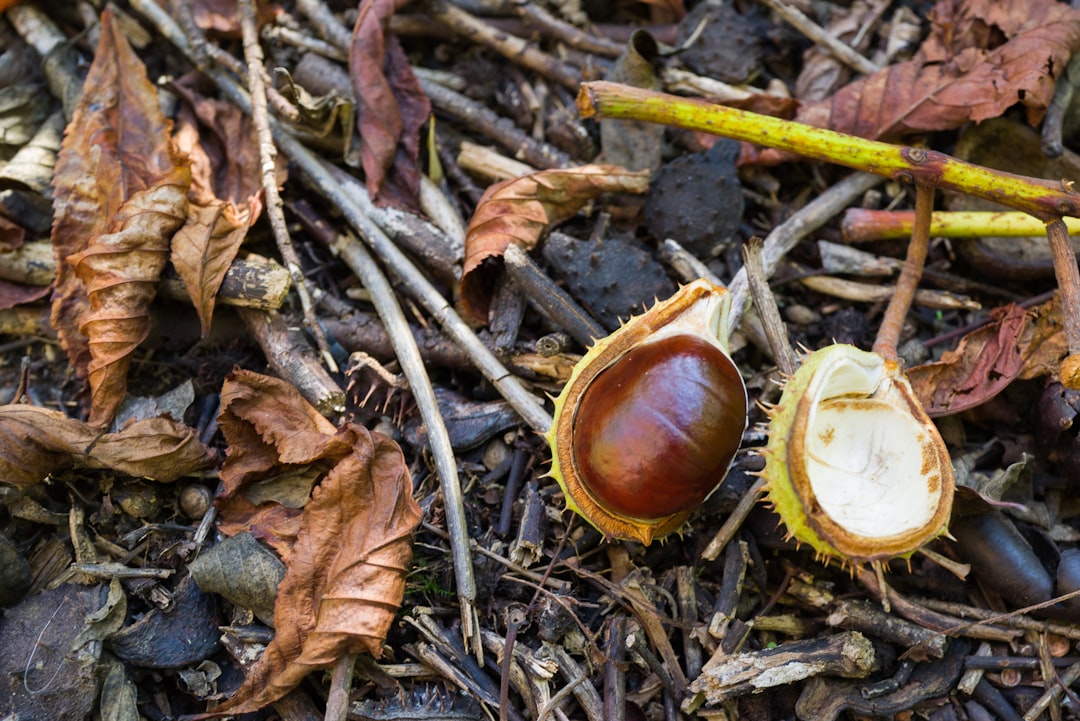
At the end of the growing season, I became neglectful of my garden. Oh, how I wish I hadn’t done that! I’m paying for it dearly now. Over the past few days, I’ve been pulling the remnants of so many weeds, which of course have gone to seed. I have a lot of work to do before spring rolls around.
And yet in the tangled mess of dead plant matter, among the brambles that had pushed themselves five feet out of the ground, I’ve seen the beauty of God. I’ve grown to understand that my idea of a neat and tidy garden might not line up with the true beauty and purpose found in the untamed wild.
For most of the history of the Christian Church, we’ve been told that the things of this world are at enmity with God. And that includes nature. As a Hellenistic Jew, Paul was likely influenced by dualistic Platonic thought when he wrote the Scriptures. Body and spirit were viewed as separate entities…bad and good…black and white. This is different from the writings we find in the Old Testament, in which the world, our bodies, and all that God created were deemed “very good.”
Paul created the basis for the concept of “original sin” by identifying the body with “fallen Adam” and the spirit with Christ. In Romans 5:18 he writes, “Therefore just as one man’s trespass led to condemnation for all, so one man’s act of righteousness leads to justification and life for all.”
But it seems like historically, most of the earliest of Christians did not believe that sin is a result of “Adam’s fall.” Instead, they believed that humans had free will and that sin was turning away from God, who was already inside of our true nature.
Augustine completed the doctrine of original sin about four hundred years after Paul. And since then, the entire world has been seen as sinful within Orthodox theology, and as a distortion of what God intended it to be.
And if our world is riddled with sin, then why take care of it?
This has caused problem after problem, with our world now a shell of what it once was. Our forests have been ravaged, and many animals are now either extinct or on the brink of extinction. Our beautiful world is hanging on by a thread.
Rosemary Radford Ruether said, “the evaluation of mortal life as evil and the fruit of sin has lent itself to an earth-fleeing ethic and Spirituality, which has undoubtedly contributed very centrally to the neglect of the earth, to the denial of our commonality with plants and animals, and to the despising of the work of sustaining the day-to-day processes of finite but renewable life.”
But what if we changed the script? What if we decided to view the world as very good just as it was?
What if we decided that mortal life wasn’t evil?
I can’t tell you what a difference it has made in my life to look at things through a different lens. Instead of thinking that this world was simply something covered in sin and passing away, I’ve decided to view it as the wonderful home God intended to give us.
It is enough just as it is. And it certainly isn’t sinful!
Slowly but surely, there have been Christian voices which are saying, “enough is enough.” We can find whispers of hope with Celtic Christianity, mystical Christianity, and many other paths less taken that follow the teachings of Jesus.
And while I do have a small plot of land dedicated to grow annual plants, I’ve decided to leave a lot of our acreage wild.
It is teeming with life, and so very beautiful.
I’d like to leave you today with part of the poem The Canticle of the Creatures by St. Francis of Assisi. In it, I find hope.
Praised be you, my Lord
with all your creatures,
especially Sir Brother Sun,
who is the day through whom
you bring us light.
And he is lovely, shining
with great splendor,
for he heralds you, Most High.
Praised be you, my Lord,
through Sister Moon and Stars.
In heaven you have formed them,
lightsome and precious and fair.
And praised be you, my Lord,
through Brother Wind, through
air and cloud, through calm
and every weather by which
you sustain your creatures.
Praised be you, my Lord,
through Sister Water,
so very useful and humble,
precious and chaste.
Praised be you, my Lord
through Brother Fire,
by whom you light up
the night, and he is
handsome and merry,
robust and strong.
Praised be you, my Lord,
through our Sister, Mother Earth,
who sustains us and directs us
bringing forth all kinds of fruits
and colored flowers and herbs.




 Nicole Crone
Leave a Reply