

Jesus, Jesus, Jesus, sweetest name I know.
Fills my every longing, keeps me singing as I go.
My forties have been a wild ride in more ways than one. Among other changes, I deconstructed (and now am reconstructing) my faith.
My deconstruction happened because I was so in love with God. I wanted to know everything possible about God, and get as close to God as humanly possible. Before completely deconstructing my faith even took a Messianic turn because if Jesus was Jewish, then by golly I wanted to live as similarly to his life on earth as I could.
When I came to the conclusion that the Bible wasn’t the literal Word of God, I was shook. I still loved Jesus and his teachings, but divorced the idea of him being the “Son of God” in my mind. I spent the next few years pursuing God with my whole heart through different avenues than the Christian way. I grew in so many ways, and grew closer to God. Yet, something was missing.
I missed my old way of life. I missed the way I related to God for so many years as a Christian, even though I was still kind of angry at the evangelical way of doing things.
I needed time. Time to heal, and time to allow my brain, emotions, and spirit to recalibrate.
I also needed time to learn how to trust my intuition. I’d almost forgotten how to think for myself as I trusted the literal interpretation of the Scriptures implicitly.
Through time and study, I began to understand why I missed my previous faith walk, and what I should do about it.
Carl Jung once said that Jesus Christ is a primary archetype in the western psyche. And boy, do I ever believe it. But how could I relate to Jesus as God after all I’d learned that I now believed to be true? I’m not the kind of person who can fake things, and I have to really believe something is true to believe it, you know?
I’d already come to the conclusion that all is One, even though it seems like there are a lot of divisions in this world. So in that sense, I did believe that Jesus was the Son of God, and we are his brothers and sisters.
But there is something more about Jesus that’s special in its own way. Perhaps it’s because of the billions of people who’ve worshiped him throughout time, since I believe the collective unconscious is strong and powerful. Our thoughts and actions have power, and when so many people believe in the same thing, it is meaningful.
But I think it’s even more than that.
While I might not believe that everything written in the Bible is 100% true, I do think that there is meaning in the myths. There is also something to say about something being true, but not factual, if that makes any sense at all.
I think that whether the gospel story is literally true or not is kind of beside the point. I think the idea of God emptying Himself (I apologize for the gendered language here) and entering a human to experience our hurts and hardships as an example of complete and total love, is the correct revelation of who God is.
God is love. Pure and simple.
Earlier in the Bible we can see that the authors’ opinion of God was often tribal and brutal. There are glimpses of these ancient people understanding the truth of God’s love and mercy, but usually, it was one step forward and then two steps back.
In the prophetic literature, we begin to see even more glimpses of the authors’ understanding of God’s love and mercy. For example, Jeremiah 7:22-23 says:
“When I led your ancestors out of Egypt, it was not burnt offerings and sacrifices I wanted from them. This is what I told them: ‘Obey me, and I will be your God, and you will be my people. Do everything as I say, and all will be well!”
Jeremiah himself says that God didn’t want burnt offerings and sacrifices after the Israelites left Egypt! (Personally I believe that sometimes the Biblical writings of the priests and prophets stand opposed to each other, which really does make sense. The priests were likely the ones arguing for sacrifice in the Biblical canon. I mean, it was their livelihood after all!)
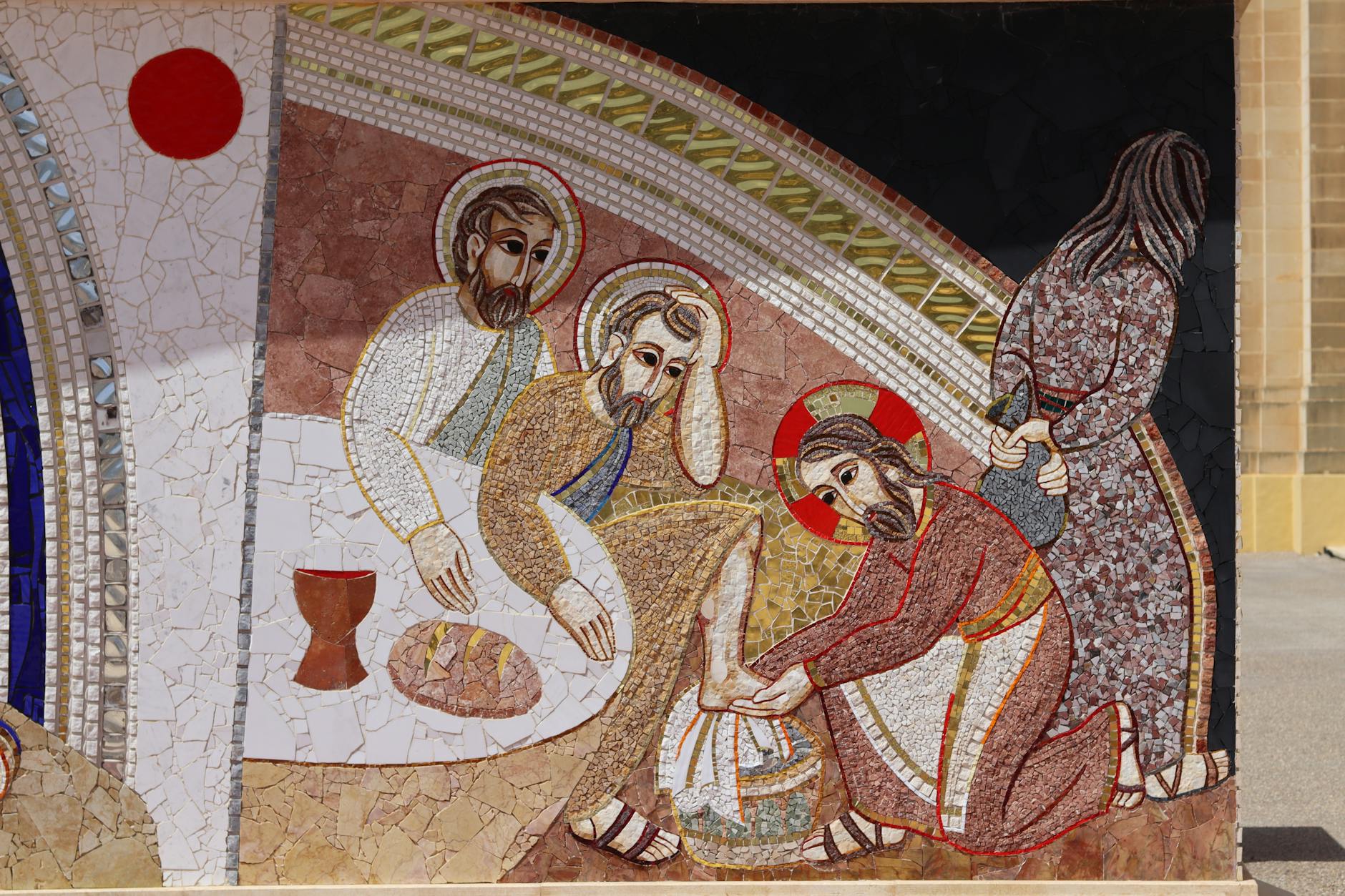
When we get to the gospel stories, people’s understanding of God has really started to change as our consciousness has continued to evolve. We’d begun to envision God as pure peace and love. I believe the story of Jesus perfectly modeled non-resistant love as the revelation of who God really was. For example, in Matthew 12:7 Jesus says this while quoting Hosea:
“And if you had known what this means, ‘I desire mercy, and not sacrifice,’ you would not have condemned the guiltless.’”
This barely scratches the surface of the idea that no, God never commanded the sacrificial system and that it in fact was the idea of people. I also think that when Jesus disrupted the temple and drove out the merchants who were selling animals for sacrifice, it was symbolic of his opinion that God didn’t agree with sacrifice.
So it doesn’t make sense to me that God would want Himself to be sacrificed as a human if He wasn’t even for sacrifice in the first place! God wouldn’t have “condemned the guiltless” (Jesus) for our sins if Jesus himself was a perfect expression of God when he spoke in Matthew 12:7.
What is the message of the cross, then?
I think that Jesus’s disruption of the temple was the catalyst that led to his crucifixion. A crucifixion that was perpetuated by human violence.
We humans are much too quick to jump to violence, aren’t we?
At the cross, God’s love absorbed human violence. The cross shows God suffering alongside humanity in its pain and injustice, instead of inflicting violence. In this way, God used the cross to display His vast love.
And what happened next?
As the story goes, Jesus rose again. This just goes to show that love really does conquer all. Next, God is said to inhabit all who live lives of love as the Holy Spirit…who would’ve thought?
The story of Jesus also symbolically highlights the life, death, and resurrection available to all who decide to walk in love and union with God. From my understanding, the story of Jesus is the first telling of a God uniting with humanity in such a way. Which is exactly what makes it so powerful.
I’m in a pretty cool position since I’ve deconstructed, since I literally am able to reconstruct my theology while listening to the whisper of God…and nothing else.
Nowadays, sometimes I read the message of Jesus in a practical and historical way, and sometimes in a metaphorical and mystical way. But above all:
I’ve chosen to read the Bible through the lens of the revelation of God as the loving, non-violent, Jesus.
What does this mean?
First of all, if a passage doesn’t align with my understanding of God as perfect love, I look at it very closely through a historical and allegorical angle.
For example, I read the book of Revelation as a political document opposing the Roman Empire and its imperial cult. I believe it used symbolic language to empower persecuted Christians during the 1st and 2nd centuries.
It makes no sense to me that the Prince of Peace would come to earth to show us the way to live through loving God and others, literally dying without complaint only to come back with a sword dripping with blood in Revelation 19. Something doesn’t add up.
Instead, I look to the example of Jesus’s actual life and do my best to follow that.
“I have set you an example that you should do as I have done for you.” -John 13:15
Jesus instructed us to follow his human example. This includes self-denial, service, and of course, love.
This post by no means explains the depth of my walk with God, or my opinion about a million other spiritual things.
Ultimately, I think love is all that really matters. And as a Westerner who was very involved in the Christian faith tradition for decades, Jesus Christ is an amazing example who I can relate to.
Jesus is my brother. Jesus is my friend. Jesus is my example. Jesus is my all in all.
What a friend we have in Jesus, all our sins and griefs to bear!
What a privilege to carry everything to God in prayer!






Leave a Reply